Network engineers tired of 3am pages
The faults that page you at 3am are often fixable in minutes from a keyboard. We built an agent to handle them for you.
The NOC gap is execution, not expertise
Every enterprise network team we talk to knows the fix for common faults: CRC errors on a trunk port, an idle BGP peer, or a VLAN missing from a trunk. Diagnosis is rarely difficult. Execution takes time because someone must wake up, connect, inspect logs, and issue the command.
PhysicalLayer launched in 2025 to bridge that gap. The agent follows the four steps a senior engineer would: watch the network, detect the fault, diagnose its root cause, and carry out the repair. It does not replace the engineer. It takes on the deterministic work that should not require waking a person.
The team behind it

Ismail brings experience diagnosing network failures in high-traffic data centers, where a BGP flap or VLAN mismatch at 3am can take a service down. He started PhysicalLayer in 2025 after seeing that the diagnostic work that woke him could already be handled by a machine.

Priya has worked on distributed telemetry systems and stream-processing infrastructure for network observability. Her experience includes high-throughput collection pipelines where missed events create direct blind spots. She leads the architecture for the agent's telemetry ingestion and fault-detection engine.
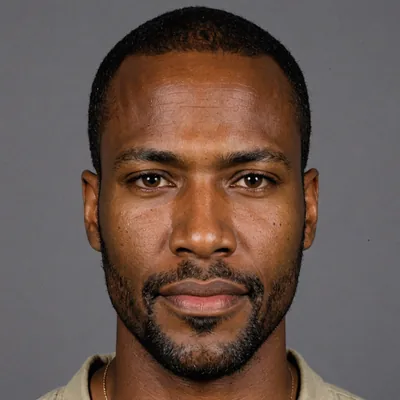
Marcus makes PhysicalLayer's diagnosis logic work across real multi-vendor environments. His network automation background includes building NETCONF and YANG models, creating repair policies for Cisco, Juniper, and Arista equipment, and identifying where automation fails in production topologies. He owns the repair policy engine and vendor integration layer.
Four principles guiding the agent
Diagnose before acting
The agent will not repair anything until it has a root cause whose confidence score exceeds the policy threshold. Acting on production network changes without a diagnosis extends outages instead of fixing them.
All actions are reversible
We implement only repairs with a clearly defined rollback. Without a dependable undo path, a repair type remains notify-only and is sent to a human engineer instead.
Every change has an audit trail
The agent logs each action with its triggering telemetry, diagnosis rationale, device state before and after, and post-repair health check. Your change management team can view that same record.
Credentials stay on your infrastructure
SNMP community strings and device credentials stay encrypted in your deployment, never in our cloud. The agent authenticates to devices from within your network perimeter, not ours.